
Strengthen Constraints and Strictly Control Urban Illumination Projects
sourceLegal Daily
time2026/01/05

- In response to the issues and difficulties identified in the report, members of the Standing Committee offered suggestions on the Energy Conservation Law.
On December 23, 2025, the 19th session of the Standing Committee of the 14th National People's Congress held a grouped deliberation on the report by the NPC Standing Committee's Law Enforcement Inspection Team regarding the implementation of the Energy Conservation Law. During the deliberations, members of the Standing Committee generally agreed that the report comprehensively reviewed the effectiveness of the law's implementation, analyzed existing problems, and put forward opinions and recommendations, with clear priorities and strong relevance. In response to the issues and difficulties identified in the report, members of the Standing Committee offered suggestions on further promoting the effective implementation of the Energy Conservation Law.
While the implementation of the Energy Conservation Law has achieved notable results, there are still a number of problems and challenges in areas such as energy-saving awareness, implementation efforts, technology promotion, industrial development, incentive mechanisms, and institutional systems. These also include insufficient understanding, inadequate control over “high energy consumption and high emissions” projects, failure to fulfill responsibilities, and weak law enforcement. It is recommended that the relevant authorities effectively address and rectify the issues identified through law enforcement inspections.
From the perspective of law enforcement and legislative improvement, it is further suggested to expedite the revision of the Energy Conservation Law to strengthen its binding force, enhance public education on the law, reinforce the seriousness and accountability of its implementation, properly balance development and conservation, improve energy-saving capacity and performance, and promote the coordinated advancement of energy conservation and green, low-carbon development. This will allow energy conservation to fully play its fundamental supporting role in high-quality development.
Digital technologies play a driving role in advancing energy-saving technological progress and in enhancing the overall energy-efficiency capabilities of related enterprises and industries. To better leverage the role of digital technologies in energy conservation, necessary measures should be taken in three key areas.
In terms of policy coordination, policymaking authorities should establish a development model that promotes coordination among digitalization, ecological sustainability, and industrialization, thereby advancing sustainable economic and social development at the local level. At the same time, a dynamic monitoring mechanism for policy coordination should be established, using digital technologies to enable timely and precise regulation and adjustment of relevant policies.
With regard to market mechanisms, governments and financial institutions should dynamically link corporate social responsibility with financing incentives, encouraging enterprises to advance the research and development of energy-saving technologies. Digital financial products, tax incentives, and fiscal subsidies should be provided to support related enterprises.
In terms of technological development, full play should be given to the key role of digital technologies in energy conservation. By leveraging digital technologies such as the Internet of Things, artificial intelligence, and big data, smart eco-industrial parks can be established. Through digital dividends, energy-saving efforts can be strengthened, promoting the green transformation of both the energy structure and the industrial structure.

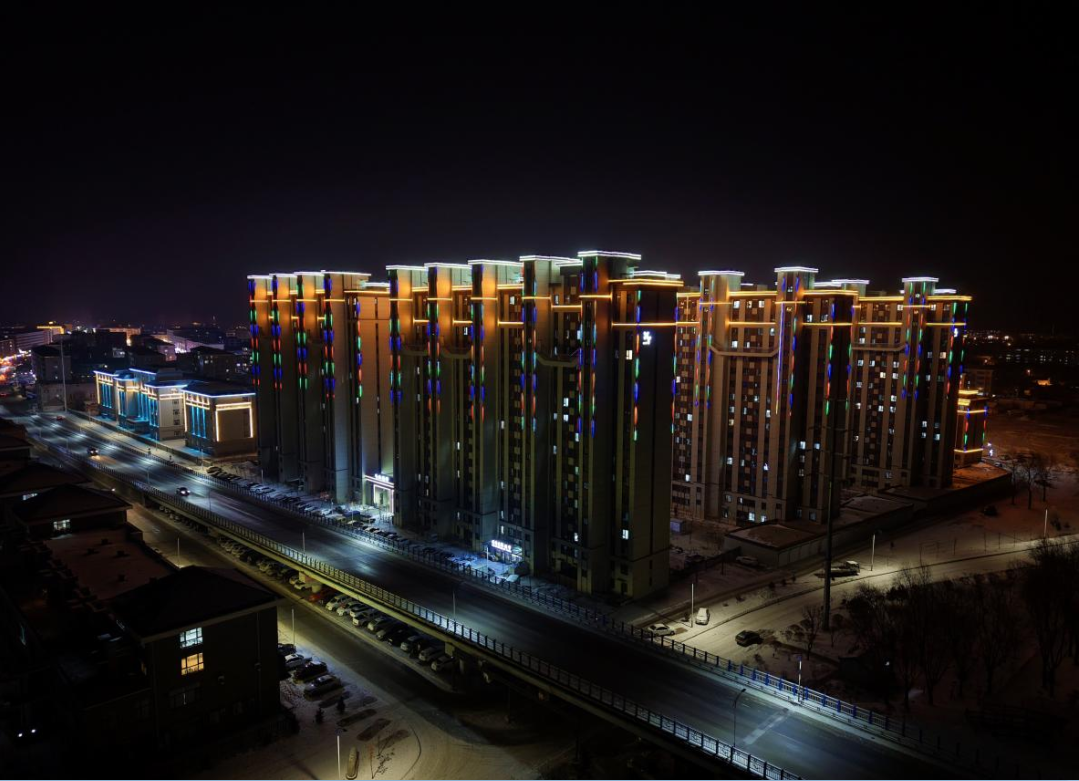
Governments at all levels and leading officials at all levels should strengthen their awareness of energy conservation and take the lead in saving energy. At present, some localities compete with one another over whose city looks more attractive or whose lighting is brighter, resulting in problems such as excessive investment in urban lighting projects, high energy consumption, light pollution, and heavy maintenance burdens.
In some places, extensive lighting is applied to large numbers of residential buildings and high-rise apartments, leading to substantial energy waste. Although the State Council has issued relevant regulations, their binding force remains insufficient. It is therefore recommended that relevant legal provisions be fully implemented and that urban lighting projects be strictly controlled.
Barrier-free renovation of existing facilities should be carried out in a one-step, comprehensive manner to avoid repeated modifications. Repeated reconstruction not only undermines economic efficiency, increases costs, and affects the social image, but is also closely linked to energy conservation. Emission reduction, compliance with standards, and carbon reduction constitute real energy savings, whereas rising costs represent an invisible form of waste.
Barrier-free and age-friendly renovations should be carried out within reasonable capacity, aim to meet standards as much as possible, and be completed successfully in one attempt. New facilities must strictly prevent the re-emergence of barriers and curb the creation of new obstacles.
In recent years, China has introduced a series of policy measures to achieve energy-saving goals and has achieved notable results. However, problems remain, such as some regulatory measures being inadequately designed, insufficiently stringent, and falling short of expected outcomes. Therefore, it is necessary to further strengthen the development of the energy-saving market system. It is recommended to appropriately adjust the pricing mechanisms for resource and energy services such as water and electricity supply, optimize price formation and tiered consumption schemes, regulate costs, and guide energy-saving behavior.
Full use should be made of monetary and fiscal policy instruments to support this effort, promoting the dual expansion of both the scope of participants and the scale of green financial products such as green bonds, thereby further enhancing market entities' motivation to pursue green transformation.

At the same time, the leading and supporting role of scientific and technological innovation in energy conservation should be strengthened. At the current stage, China's energy sector faces challenges such as the need for breakthroughs in key project R&D, mismatches between the supply and demand of existing technologies, and slow progress in technology promotion and application, indicating that the level of technological transformation and empowerment still needs improvement.
It is recommended to encourage research institutions to intensify research on energy recycling and utilization technologies, explore and expand substitution scenarios for renewable energy sources such as water, wind, solar, and nuclear power, and optimize the energy structure.
Efforts should also be made to improve services for green technology transformation, refine supporting systems for the commercialization of scientific and technological achievements, build platforms for the application and promotion of energy-saving technologies, lower the barriers for energy users to access and upgrade technologies, and further enhance technological empowerment to support energy conservation and emissions reduction.
China's energy conservation and emissions reduction efforts have reached a stage where clean energy is expected to largely replace fossil fuels. Owing to technological progress, clean energy has become even cheaper and more competitive than fossil energy. Replacing fossil fuels with clean energy is not only significant for carbon reduction, but more importantly enhances energy autonomy and control, greatly reducing strategic energy risks. Therefore, the country should make every effort to develop clean energy.

Focus on key sectors and carry out energy-saving and carbon-reduction retrofits. Energy consumption in China's industrial sector accounts for about two-thirds of total national energy use, making energy conservation and carbon reduction in industry a key lever for achieving a green and low-carbon transition. It is recommended to align with the in-depth implementation of the “Two New” policies, take energy efficiency as a starting point, accelerate the phase-out of outdated and inefficient equipment, and promote the transformation and upgrading of traditional industries, thereby supporting the high-end, intelligent, and green development of the manufacturing sector.
At the same time, further stimulate the intrinsic motivation for energy saving by improving policy tools such as pricing, taxation, and finance. Measures include deepening the tiered electricity pricing system, implementing tax incentives for comprehensive resource utilization, and enriching green financial products, so that energy saving and carbon reduction deliver tangible economic benefits. Strengthen energy conservation publicity and education, and foster a new social ethos that values frugality and green, low-carbon living across society.

The revision of the Energy Conservation Law has been included in the legislative plan of the 14th National People's Congress Standing Committee. It is recommended to closely integrate the key and difficult issues identified during this law enforcement inspection, conduct in-depth research and demonstration, and accelerate the legislative revision process.